How to Use the War Room in Analytics
The War Room is a structured review space for analytics work. It helps a reviewer understand the full chain of value: who the work serves, what changed, how the data was transformed, how decisions are supported, and what must be in place before a solution can run safely in a real organisation.
Use it when you want to evaluate analytics work through business impact, technical judgement, decision quality and production readiness.
The Analytics Pipeline
The War Room moves from context to deployment. Each step answers one review question and produces one useful output.
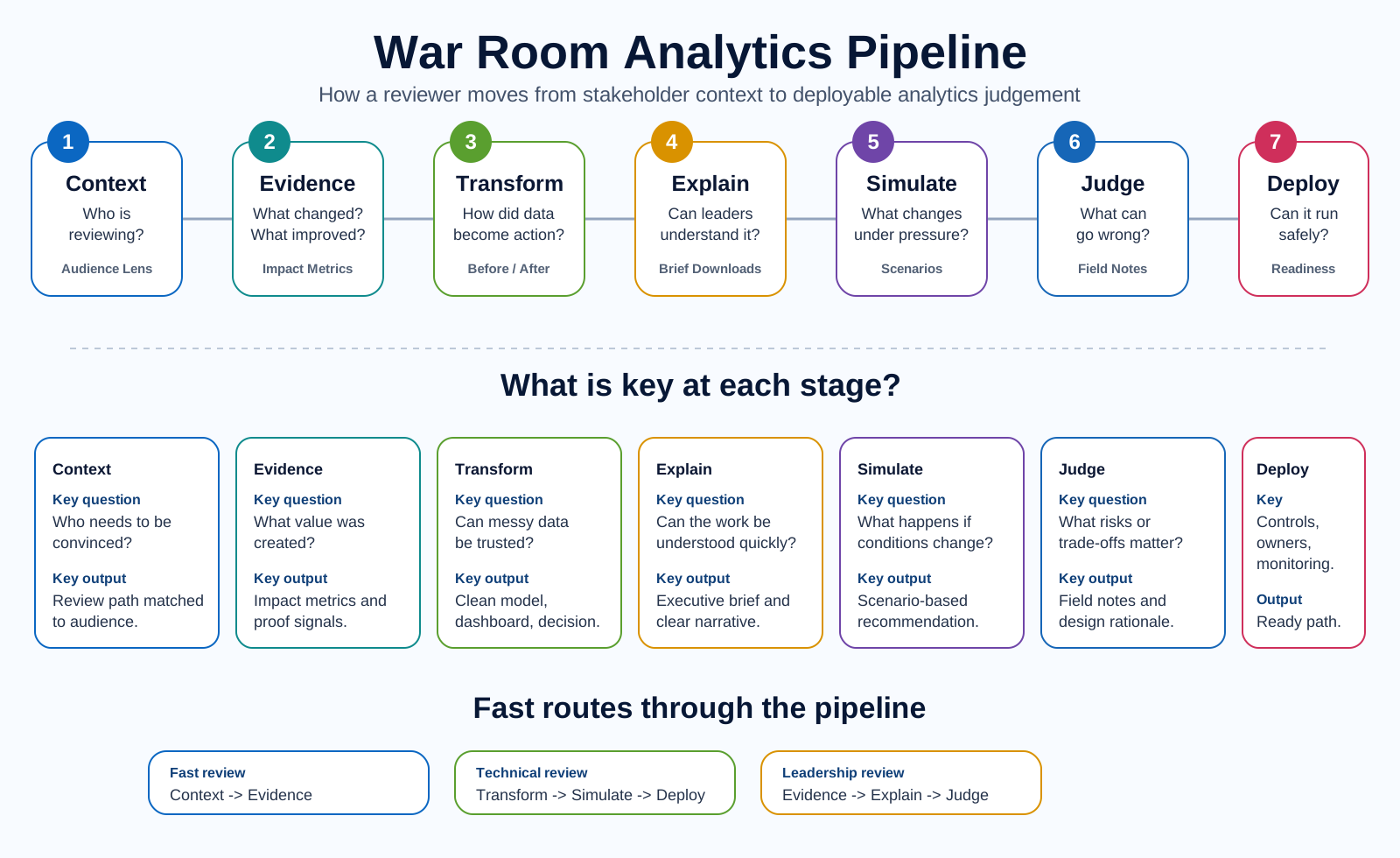
Path Map: What Matters at Each Stage
This view replaces the raw text tree with a readable map of the key question, evidence and output for every stage.
Context
Evidence
Transformation
Communication
Simulation
Judgement
Deployment
Recommended Review Routes
Start with the reviewer need. The War Room is strongest when it is used as a route, not as a random menu.
Audience Lens -> Impact Evidence. Best when time is limited and the reviewer needs outcome proof quickly.
Audience Lens -> Brief Downloads -> Field Notes. Best for role fit, communication and thinking style.
Before / After -> Decision Simulators -> Production Readiness. Best for implementation depth and controls.
Impact Evidence -> Brief Downloads -> Decision Simulators. Best for value, action and decision confidence.
How Each Section Supports Analytics
It separates recruiter, leader, technical and mission-impact reviews so the user sees the most relevant evidence first.
It focuses on time saved, process improvement, reporting quality and decision support.
It shows how raw inputs become clean models, dashboards and final decision outputs.
It creates concise summaries for interviews, stakeholder meetings and quick reviews.
It shows how risk, confidence, capacity and backlog can change a recommendation.
It documents trade-offs, failure points and the reasoning behind analytics choices.
It reviews ownership, access control, monitoring, data quality, auditability and governance.
Users can ask which path to take, what each stage proves, who owns it and what impact it shows.
What the War Room Demonstrates
The work starts from stakeholder needs and operational decisions.
Raw inputs are cleaned, modelled and turned into usable outputs.
Dashboards and simulations connect analysis to practical action.
Technical work is translated into language that leaders can understand.
The work considers controls, ownership, monitoring and safe deployment.